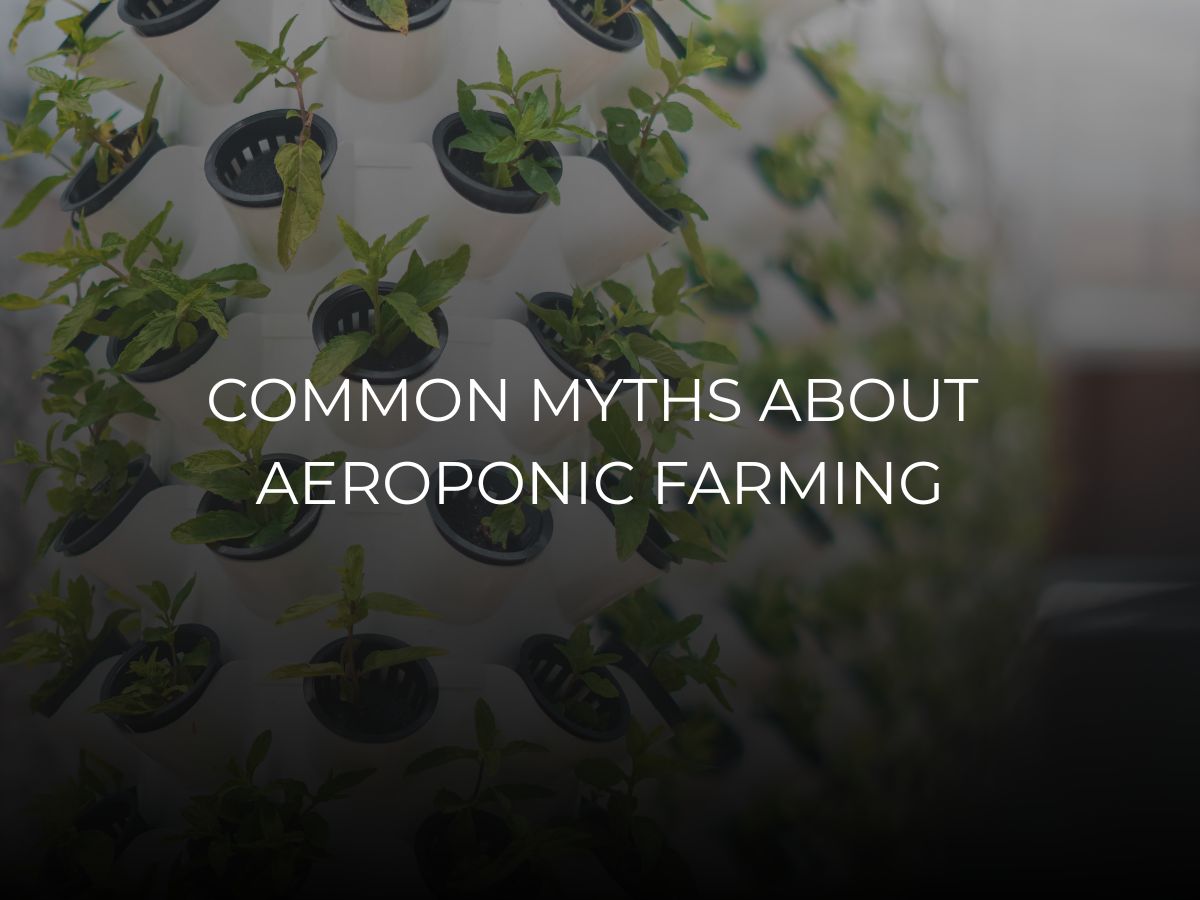
Common Myths About Aeroponic Farming: Separating Fact from Fiction
If you’ve recently come across aeroponic farming, you’ve probably also come across plenty of opinions about it.
Some people believe aeroponic vegetables are “plastic food.” Others think they aren’t healthy, contain fewer nutrients than soil-grown crops, or are loaded with chemicals. We’ve even heard people say, “This might work in other countries, but it can’t work in Pakistan.”
At Spurt Nova, these aren’t just myths we’ve read online. They’re questions we hear regularly from people visiting our farms, commenting on our social media posts, or learning about aeroponics for the first time.
The good news is that most of these concerns have already been studied by researchers. So instead of relying on opinions, let’s look at what science and real-world farming experience actually tell us.
Why Do So Many Myths Exist About Aeroponics?
Because aeroponics looks different from traditional farming.
For generations, we’ve associated healthy crops with fertile soil. Seeing plants growing without soil naturally raises questions.That’s completely understandable.
The same thing happened when drip irrigation, greenhouse farming, and solar-powered agriculture were first introduced. New technologies often seem unfamiliar until people understand how they work.
According to a systematic review of aeroponic technology published in Agronomy (MDPI), aeroponics is still an emerging agricultural technology, which explains why public awareness remains limited and misconceptions continue to spread.
Myth 1: “Aeroponic Vegetables Are Plastic”
No. Aeroponic vegetables are real, living plants. They are not made of plastic, manufactured in a laboratory, or artificially created. The only difference is how they receive water and nutrients.
If we had to choose one myth that appears more than any other on our social media posts, this would be it.
Comments like “We’re eating plastic now,” or “These aren’t real vegetables,” are surprisingly common. While these statements are often made jokingly, they highlight a genuine misunderstanding about how plants grow.
The confusion usually begins with appearance.
Unlike conventional farms, aeroponic systems don’t have rows of soil surrounding each plant. Instead, the roots hang inside an enclosed chamber where they’re regularly sprayed with a nutrient-rich mist. To someone seeing this for the first time, it can look more like a science experiment than a farm.
But appearance alone doesn’t determine how a plant develops.
From a biological perspective, an aeroponic lettuce plant is still a lettuce plant. It grows through photosynthesis, produces chlorophyll, develops leaves, absorbs water, and converts sunlight into energy in exactly the same way as a lettuce plant growing in soil. Its DNA doesn’t change simply because its roots aren’t buried underground.
The key difference lies beneath the plant.
In traditional farming, the soil acts as a reservoir, holding water and dissolved minerals that roots absorb over time. In aeroponics, those same essential minerals are delivered directly to the roots through a fine mist. The plant still absorbs nitrogen, phosphorus, potassium, calcium, magnesium, and other essential nutrients, but without relying on soil as the delivery medium.
This is supported by the Lakhiar et al. (2018) review on aeroponic systems, which explains that aeroponic cultivation maintains the plant’s natural physiological processes while replacing soil with a controlled nutrient delivery system.
Another comprehensive 2026 review published in the journal Agriculture (MDPI) reaches a similar conclusion, describing aeroponics as a form of controlled-environment agriculture that improves water and nutrient efficiency without changing the plant’s fundamental biology.
In other words, aeroponics changes how nutrients reach the roots, not what the plant becomes.
What We’ve Seen at Spurt Nova
We’ve had the privilege of welcoming many visitors to our aeroponic farms, including school groups, university students, farmers, and families. Interestingly, the first question isn’t usually about technology.
It’s about the vegetables.
People often point towards the crops and ask, “Are these real?”
Instead of answering immediately, we usually invite them to walk closer. They touch the leaves, look at the roots, and observe how the plants are growing. As we explain the role of nutrient solutions and oxygen-rich root environments, the reaction is almost always the same.
“I thought these were artificial, but they’re just… plants.”
Moments like these remind us that education is just as important as innovation. Once people understand the science behind aeroponics, the idea of “plastic vegetables” quickly disappears.
Myth 2: “Aeroponic Vegetables Aren’t Healthy”
No. When grown properly, aeroponic vegetables are just as healthy as conventionally grown vegetables because plants absorb nutrients, not soil.
This myth comes from the belief that soil is what gives vegetables their nutrition. In reality, plants absorb essential minerals such as nitrogen, potassium, calcium, and magnesium through their roots. Soil simply stores these nutrients until the plant takes them up.
In an aeroponic system, those same nutrients are delivered directly to the roots through a carefully balanced nutrient solution. The plant uses them in exactly the same biological processes.
Research supports this. A 2026 review published in the journal Agriculture found that well-managed aeroponic systems can produce high-quality crops by providing precise control over nutrients, water, oxygen, and environmental conditions. Likewise, the Lakhiar et al. (2018) review explains that aeroponics maintains the plant’s natural nutrient uptake while replacing soil with a controlled growing environment.
At Spurt Nova, this is one of the questions we hear most often. Once visitors understand that plants absorb nutrients rather than soil itself, many of their concerns disappear. It becomes clear that healthy vegetables depend on good farming practices, whether they’re grown in soil or through aeroponics.
Myth 3: “Aeroponic Vegetables Don’t Contain Enough Nutrients”
No. Aeroponic vegetables can be just as nutritious as soil-grown vegetables when they are grown under the right conditions.
Many people assume that because aeroponic plants don’t grow in soil, they must be missing important nutrients. However, that’s not how plants work. Plants absorb essential minerals through their roots, whether those minerals come from soil or a carefully balanced nutrient solution.
In aeroponic farming, growers monitor nutrient levels throughout the growing cycle to ensure plants receive what they need at every stage of growth. This level of precision helps support healthy plant development and consistent crop quality.
Scientific research supports this. A 2026 review published in the journal Agriculture found that well-managed aeroponic systems can produce high-quality crops by precisely controlling nutrients, water, oxygen, and other environmental conditions. Similarly, the Lakhiar et al. (2018) review on aeroponic systems explains that plants in aeroponic systems absorb nutrients through the same natural biological process as soil-grown plants.
At Spurt Nova, one of the most common questions we hear is whether vegetables grown without soil can provide the same nutrition. Once we explain how plants absorb nutrients and show visitors the growing process, they often realise that it’s the nutrients themselves, not the soil, that matter most.
Myth 4: “Aeroponic Farming Uses Too Many Chemicals”
Not true. Aeroponic farming uses essential plant nutrients, not harmful chemicals to “create” vegetables.
The word “chemical” often creates confusion. Everything around us, including water and the minerals naturally found in soil, is made up of chemicals. Plants need nutrients such as nitrogen, phosphorus, potassium, calcium, and magnesium to grow, and these are the same nutrients they absorb whether they’re grown in soil or in an aeroponic system.
The difference is that, in aeroponics, these nutrients are delivered through a carefully balanced nutrient solution instead of being absorbed from the soil. This allows growers to monitor exactly what the plants receive, reducing waste and improving nutrient efficiency.
A 2026 review published in the journal Agriculture highlights that controlled-environment systems like aeroponics allow for precise nutrient management while reducing resource waste. This doesn’t mean every aeroponic farm is automatically better, but it does show that the use of nutrient solutions is based on plant science, not artificial food production.
At Spurt Nova, we often explain that nutrients are not something unique to aeroponics. They’re the same essential minerals that plants naturally absorb from healthy soil. The only difference is the method of delivery.
Myth 5: “Aeroponic Farming Is Too Expensive”
Partly true. While setting up an aeroponic farm requires a higher initial investment, it can become cost-effective over time through efficient use of water, nutrients, and growing space.
This myth usually comes from comparing the upfront cost of an aeroponic system with traditional farming. Since aeroponics relies on equipment such as pumps, misting systems, sensors, and nutrient reservoirs, the initial investment is naturally higher.
However, looking only at the setup cost doesn’t tell the full story. Well-managed aeroponic systems use significantly less water, minimise nutrient waste, and make better use of available space. These efficiencies can help reduce operating costs over time, especially for high-value crops.
A 2026 review published in the journal Agriculture found that aeroponic systems can reduce water consumption by more than 90% compared to conventional farming while improving resource efficiency.
At Spurt Nova, we believe aeroponics isn’t meant to replace every type of farming. Instead, it’s a smart solution for situations where water conservation, year-round production, or limited growing space are key priorities.
Myth 6: “Aeroponic Farming Will Replace Traditional Farming”
No. Aeroponic farming is designed to complement traditional farming, not replace it.
This is one of the biggest misconceptions about aeroponics. While it offers many advantages, such as efficient water use and controlled growing conditions, it isn’t a replacement for conventional agriculture. Traditional farming remains essential for producing staple crops like wheat, rice, maize, and many other foods that feed the world’s population.
Aeroponics is better suited for crops such as leafy greens, herbs, strawberries, and seed potatoes, where precise control over the growing environment can improve efficiency and consistency. Both farming methods have their own strengths and are suited to different needs.
A 2026 review published in the journal Agriculture highlights that aeroponics should be viewed as part of sustainable and controlled-environment agriculture, offering an additional solution to challenges such as water scarcity and limited arable land rather than replacing conventional farming.
At Spurt Nova, we have great respect for traditional farmers who have been feeding communities for generations. We see aeroponics as another tool that can support agriculture, helping farmers grow certain crops more efficiently while working alongside conventional farming practices.
Myth 7: “Aeroponic Farming Can’t Work in Pakistan”
False. With the right expertise, infrastructure, and management, aeroponic farming can successfully grow crops in Pakistan.
Many people believe that aeroponic farming is only suitable for developed countries because it relies on modern technology. However, the success of an aeroponic farm depends on proper system design, skilled management, and regular monitoring, not the country where it’s located.
In fact, Pakistan faces challenges such as water scarcity, changing climate conditions, and increasing demand for fresh produce. These challenges make resource-efficient farming methods like aeroponics worth exploring. Research published in the journal Agriculture highlights aeroponics as a promising solution for improving water-use efficiency and supporting sustainable food production.
At Spurt Nova, we’ve shown that aeroponic farming can work successfully in Pakistan. Every day, we grow fresh produce using controlled-environment agriculture while also educating visitors, students, and farmers about how the technology works. Seeing healthy crops growing locally helps people understand that aeroponics isn’t just a concept from abroad. It’s already becoming a reality here.
Conclusion
As with any new technology, aeroponic farming is surrounded by questions and misconceptions. From concerns about nutrition and chemicals to doubts about its practicality in Pakistan, many of these myths come from unfamiliarity rather than scientific evidence.
Research shows that aeroponics is simply another method of growing plants, one that delivers nutrients efficiently, uses significantly less water, and allows growers to manage the growing environment with greater precision. At the same time, it’s important to remember that aeroponics is not a replacement for traditional farming. Both methods have valuable roles to play in building a more sustainable agricultural future.
At Spurt Nova, we’re committed to helping people better understand aeroponic farming through education, innovation, and practical experience. By sharing accurate information and demonstrating the technology in action, we hope to inspire greater confidence in modern farming while continuing to support the future of agriculture in Pakistan.
Also Read